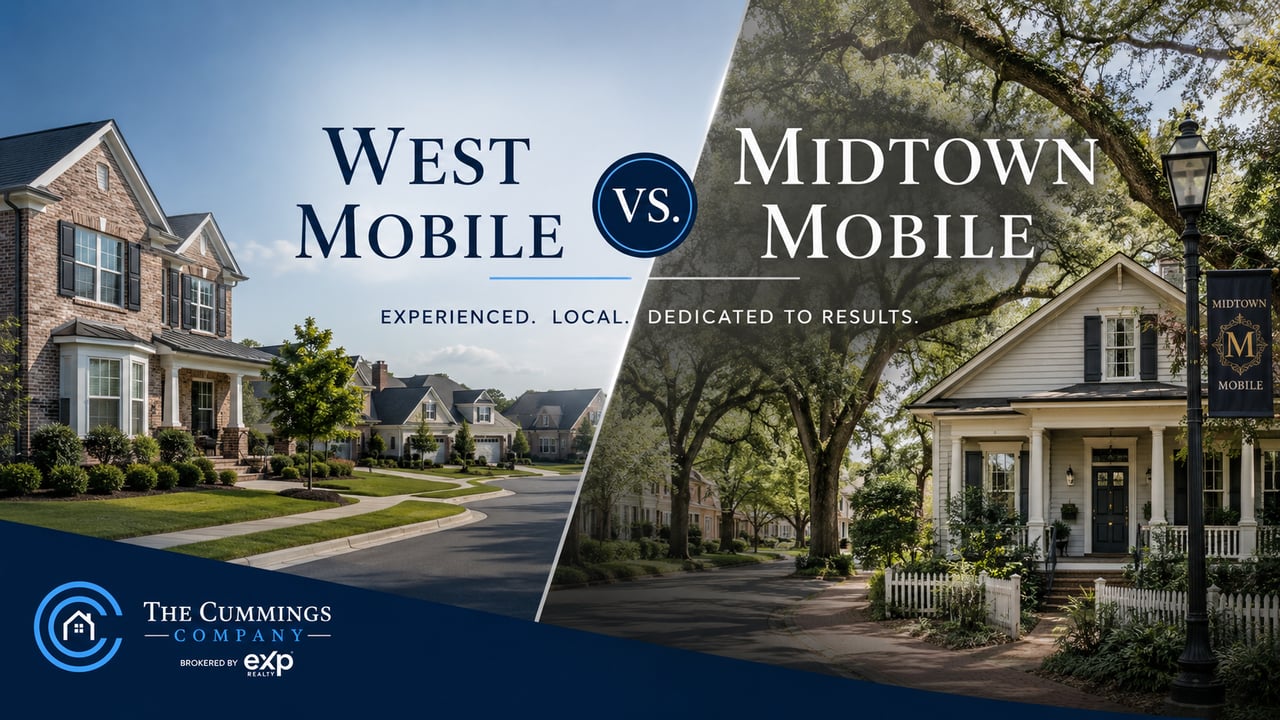
West Mobile vs. Midtown Mobile: Which Neighborhood is Right for You in 2026?
Quick Answer
West Mobile and Midtown Mobile represent two very different ways of living in the same city. West Mobile offers newer construction, larger homes, and top-rated schools in a suburban setting, while Midtown Mobile delivers historic charm, walkability, and more affordable entry points in the heart of the city. The right choice depends entirely on what a buyer values most — space and suburban convenience, or character and urban proximity.
Introduction
Mobile, Alabama is having a moment. With a citywide median home price of $224,000 — up more than 4% year-over-year as of early 2026 — and a real estate market that has proven remarkably resilient, buyers are arriving from across the Gulf Coast region and beyond to plant roots in one of the South's most underrated cities. Mobile offers live oaks and history alongside growing infrastructure, a thriving healthcare sector anchored by institutions like USA Health (the clinical arm of the University of South Alabama), and neighborhoods that range from tree-canopied historic districts to sprawling modern subdivisions.
That diversity of housing options is one of Mobile's greatest strengths — and one of the biggest sources of confusion for buyers who are new to the market. Two neighborhoods that consistently come up in conversations with buyers are West Mobile and Midtown Mobile. They are both desirable. They both attract families, professionals, and investors. But they are fundamentally different places to live.
This guide, written by The Cummings Company at cummingsexp.com, breaks down each neighborhood in detail — prices, lifestyle, schools, commute, and long-term value — so buyers can make a fully informed decision. Whether someone is relocating to Mobile, upsizing within the city, or searching for their first home, this comparison is the place to start.
One thing worth noting: the Mobile Alabama real estate market in 2026 remains competitive in the most sought-after pockets of both neighborhoods. Well-priced, well-maintained homes in West Mobile and Midtown alike are attracting serious attention. Understanding the differences between these two areas is the first step toward making a smart, confident move.
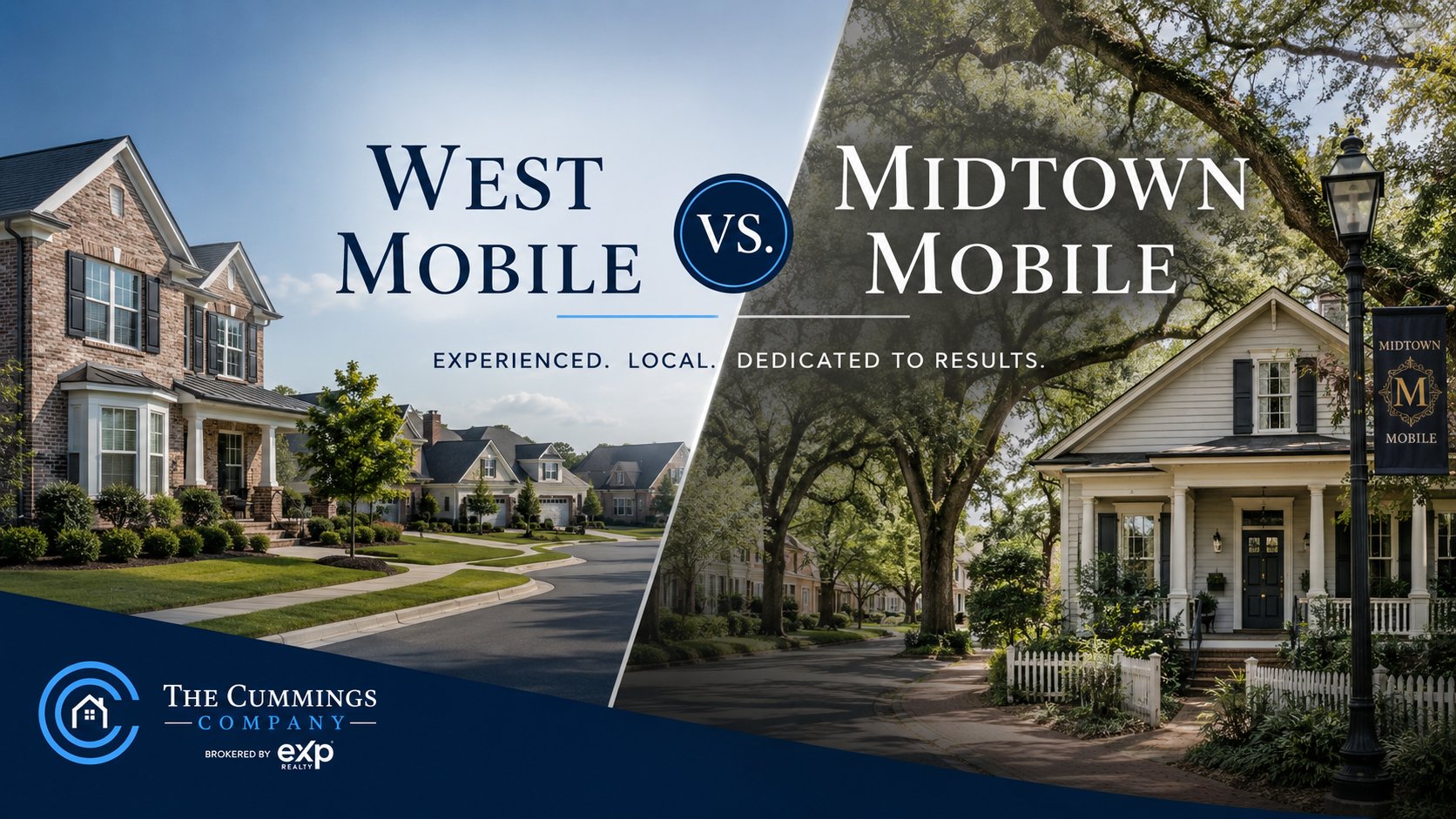
What is West Mobile?
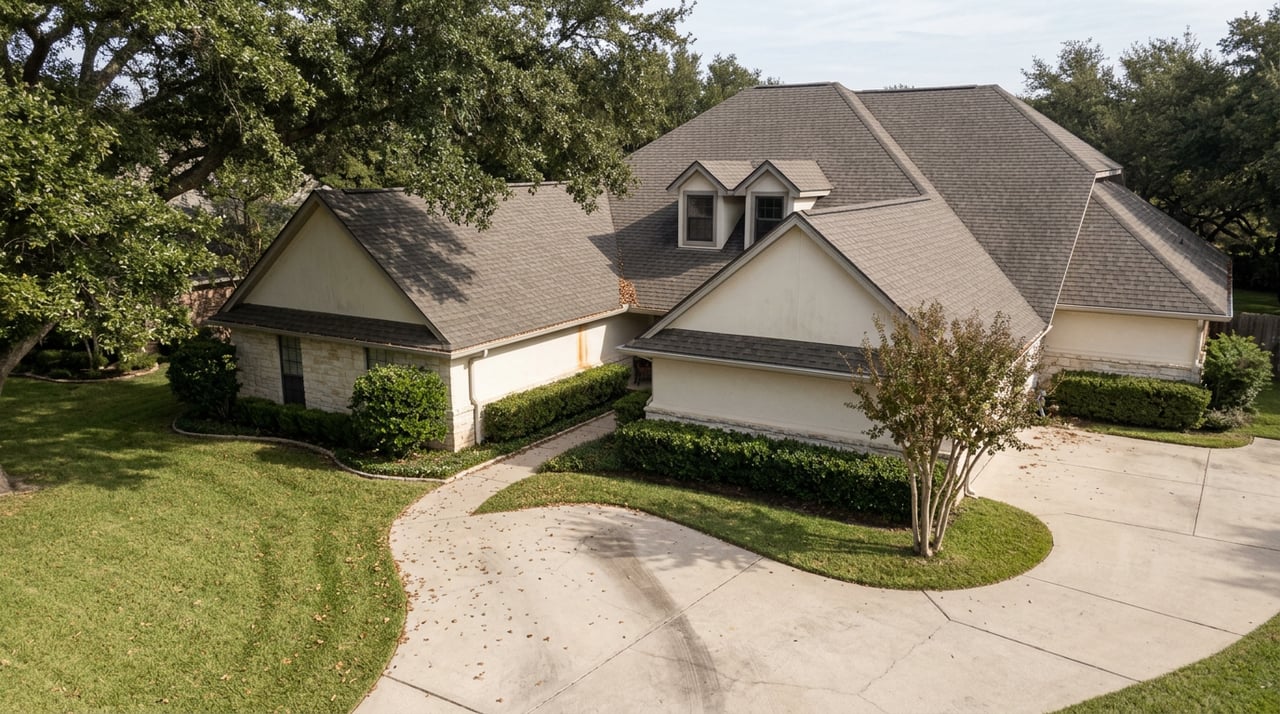
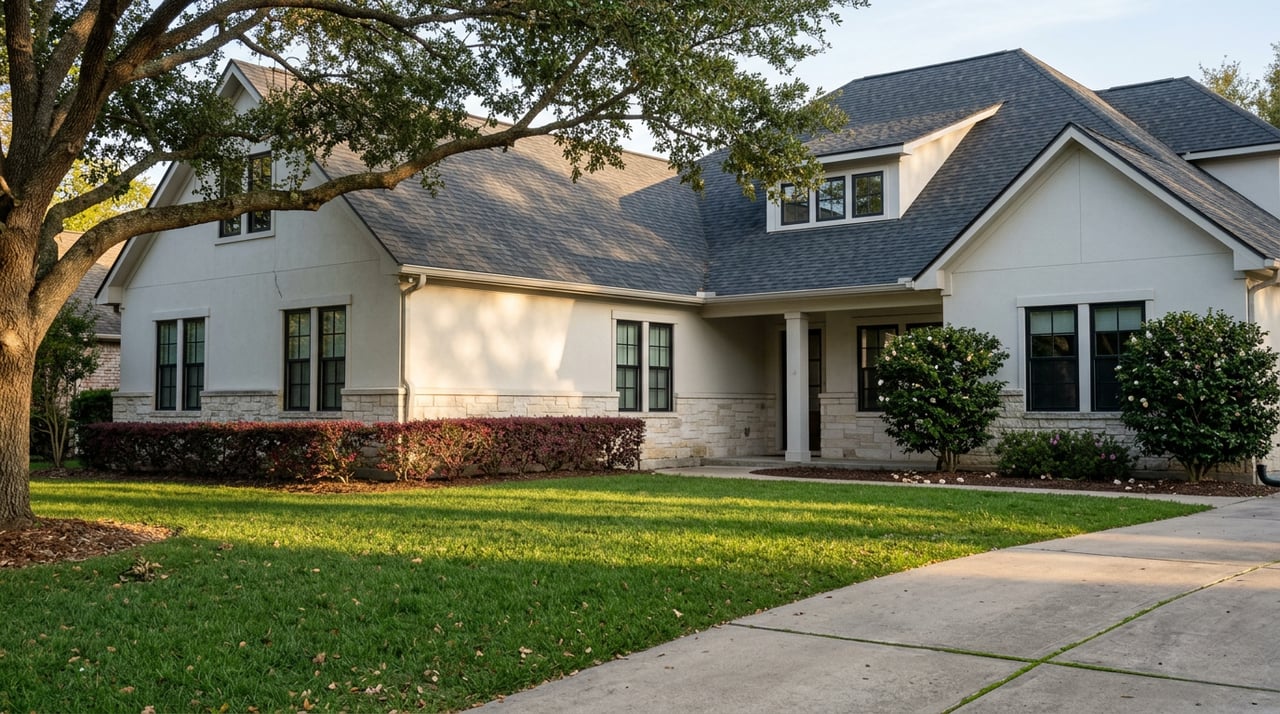
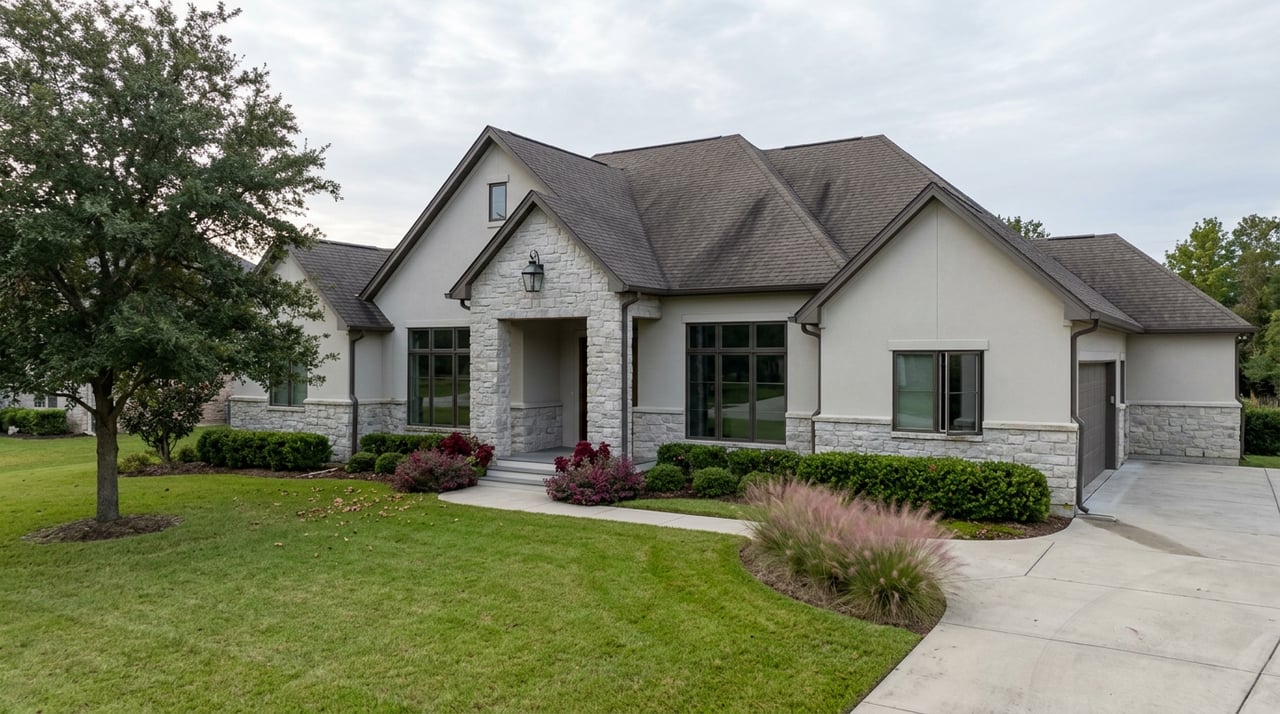
West Mobile refers to the residential corridor stretching along Airport Boulevard and Schillinger Road, pushing outward toward the western suburbs of the city. This is the area of Mobile that has seen the most concentrated new construction activity over the past two decades, and it shows — in the wide streets, the planned subdivisions, the attached garages, and the modern finishes that buyers who've come from other Sun Belt cities will immediately recognize.
The appeal of West Mobile real estate is straightforward: buyers get more square footage for the money, newer home systems, and a location that puts them close to the region's best schools, major retailers, and healthcare facilities. Providence Hospital is located in this corridor. The Shoppes at Bel Air and surrounding retail hubs serve everyday needs. The University of South Alabama is nearby. Medal of Honor Park — one of Mobile's premier green spaces, featuring walking trails, sports fields, and a dog park — is a major quality-of-life draw for families with children and pets alike.
Some of the most active subdivisions in West Mobile include:
-
Sugar Creek — averaging approximately $290,000, typically 4 bedrooms, 3 bathrooms, and around 3,000 sq ft of living space
-
Regency — averaging around $230,000 with homes typically offering 2,800+ sq ft
-
Lamplighter Woods — averaging approximately $228,000 with homes in the 2,500 sq ft range
West Mobile skews toward HOA-governed communities, which helps maintain property values and neighborhood aesthetics but does add a monthly cost to consider. The lifestyle here is firmly car-oriented — residents drive for groceries, dining, and nearly everything else — with a commute to downtown Mobile of approximately 20 to 25 minutes. For buyers who work in or near the western suburbs, that commute may be even shorter.
Buyer demand in West Mobile remains among the highest in the Mobile market. Homes in the most desirable subdivisions move quickly, and the area has consistently attracted relocating families, medical professionals, and buyers upsizing from smaller homes elsewhere in the city.
What is Midtown Mobile?
Midtown Mobile occupies a distinct geographic and cultural position within the city. Bounded roughly by Spring Hill Avenue to the north, N. Florida Street to the west, Government Street to the south, and Semmes/Gladys/Houston Avenue to the east, Midtown is Mobile's historic residential core — and one of its most beloved.
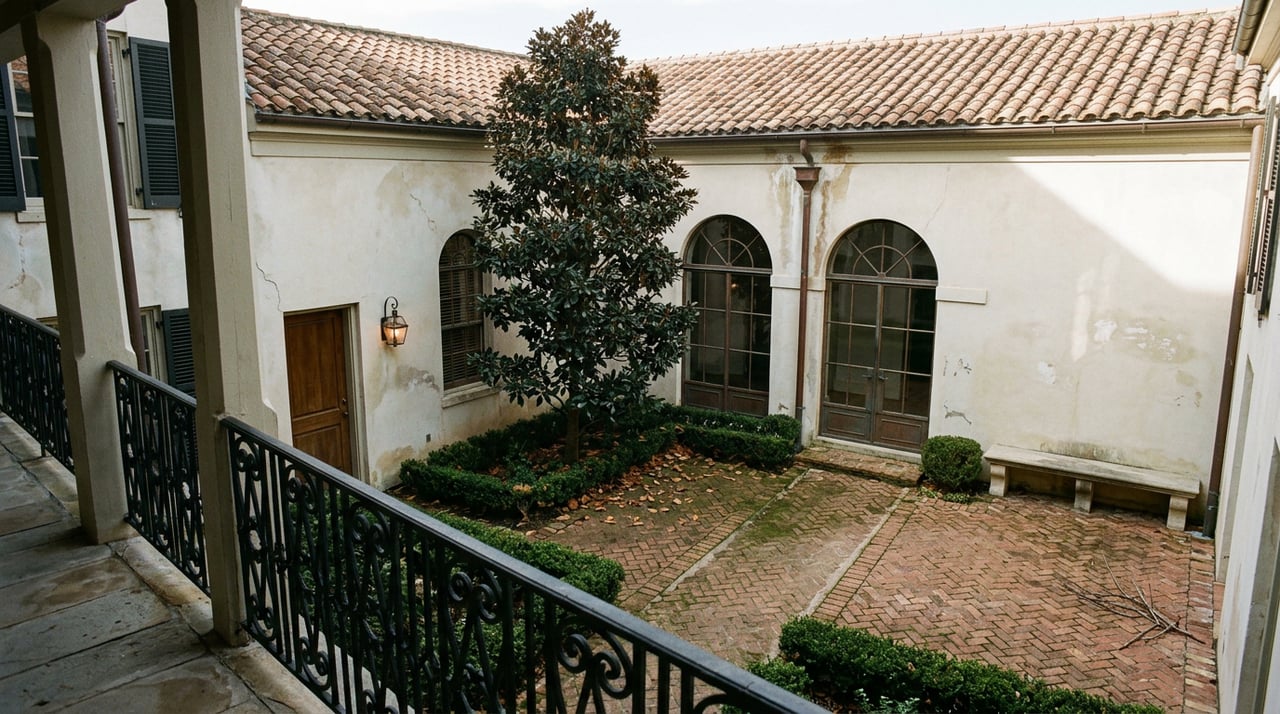
The homes here tell stories. 1920s Craftsman bungalows with deep front porches and original hardwood floors sit alongside Greek Revival estates and grand Queen Anne properties. The canopy of live oaks overhead, the sidewalks, the historic churches, and landmarks like the Bragg-Mitchell Mansion and the Church Street historic district give Midtown a sense of place that simply cannot be replicated in newer construction areas.
Midtown Mobile homes for sale typically range from around $106,000 to $449,000, with most single-family properties transacting in the $130,000 to $350,000 range. Square footage runs from approximately 926 to 2,400 sq ft, and lots tend to be smaller — typically 0.10 to 0.25 acres. The median sale price in Midtown over the past 12 months has settled at around $225,000, up approximately 3% year-over-year.
What Midtown offers in exchange for smaller square footage is location and community. Downtown Mobile is roughly a 6-minute drive — close enough that Midtown residents can easily access the city's restaurant scene, cultural events, waterfront attractions, and employment centers without committing to a long daily commute. The neighborhood is also meaningfully walkable by Mobile standards, with several coffee shops, restaurants, and local businesses accessible on foot or by bike.
Midtown's community culture is one of its most frequently cited assets. Residents gather for events ranging from the LoDa Art Walk to park movie nights to the neighborhood's celebrated Mardi Gras season, when homes are decorated in the full tradition of Mobile's carnival heritage — Mobile, after all, is the birthplace of Mardi Gras in the United States. That community identity is something longtime residents guard fiercely, and it is a major draw for buyers who want more than just a house.
Property taxes in Midtown are notably low, even by national standards — a meaningful financial consideration for buyers evaluating total cost of ownership. Average household income in the neighborhood sits around $69,700, and the owner/renter split is almost exactly 50/50, giving the area a diverse residential mix of families, retirees, young professionals, and singles.
West Mobile vs. Midtown Mobile — Side-by-Side Comparison
Best for Families
For buyers who are prioritizing school quality, square footage, and a neighborhood built around family life, West Mobile holds the advantage. The combination of larger homes — often 4 bedrooms and 2,500 to 3,000+ sq ft — with access to some of Mobile's best-rated schools and amenities like Medal of Honor Park makes West Mobile the default choice for families with children who need room to grow.
Old Shell Road Magnet School is consistently ranked as one of the finest schools in the state of Alabama, and its presence near the West Mobile corridor is a significant driver of buyer demand in the area. Families looking for private options have access to a strong cluster of schools including McGill-Toolen Catholic High School, UMS-Wright Preparatory School, and St. Paul's Episcopal School, many of which are accessible from both West Mobile and Midtown.
That said, Midtown is not without family appeal. The neighborhood's tight-knit community, lower price points, and proximity to downtown can work extremely well for families who prefer an urban-adjacent lifestyle and do not need the largest possible floor plan. Midtown's schools — including Murphy High School and private options — serve the area well. For families who value walkability, community events, and a home with authentic character over square footage, Midtown is a legitimate choice.
Bottom line: Families seeking the most space, the newest homes, and the most family-centric neighborhood infrastructure will generally prefer West Mobile. Families who prioritize community, location, and historic character will find Midtown a strong alternative.
Best for First-Time Buyers
First-time buyers often face a tradeoff between what they can afford and where they want to live, and both West Mobile and Midtown offer genuinely competitive options at different points on the spectrum.
Midtown Mobile presents the more accessible entry point. With single-family homes starting in the $130,000–$170,000 range and a median sale price of around $225,000, Midtown allows first-time buyers to enter a well-established, in-demand neighborhood without stretching their budget to the limit. The neighborhood's low property taxes further reduce the total monthly cost of ownership — an important consideration when calculating what a buyer can realistically afford. Using the standard 28% income rule and a 30-year fixed mortgage at current rates, a household earning approximately $50,000 annually can realistically afford a home in Midtown.
In West Mobile, first-time buyers can still find opportunities — particularly in slightly older sections of the corridor where prices are more moderate — but the average price point in the most desirable new construction subdivisions is higher, and HOA fees add a monthly overhead that can affect affordability calculations.
For first-time buyers with a specific need for a newer home, a garage, or a specific school zone, West Mobile may be worth stretching the budget. For buyers who want the most home and neighborhood for their dollar, with community built in from day one, Midtown offers an exceptional value proposition.
Best for Investors and Long-Term Value
Both neighborhoods have demonstrated consistent appreciation over the past several years, and both carry characteristics that support long-term investment value — but the investment case for each looks different.
West Mobile benefits from sustained buyer demand, high-quality new construction, and the ongoing growth of the western Mobile corridor. As more families, medical professionals, and relocating buyers target this area, well-positioned homes in established subdivisions like Sugar Creek and Regency tend to hold and build value. The area's top-rated schools create a captive buyer pool that supports prices even in softer market conditions.
Midtown Mobile offers a different but equally compelling investment thesis. Historic neighborhoods with walkable amenities and genuine character tend to appreciate steadily over time and are increasingly attractive to younger buyers who prize urban-adjacent living. Midtown's price range means investors can acquire properties at lower absolute price points, and the roughly 50% renter population provides a built-in rental demand base. The neighborhood's renovation potential — older homes that can be meaningfully upgraded — also creates opportunities for value-add buyers.
For pure rental income potential, Midtown's location and walkability score well. For long-term appreciation driven by school quality and suburban lifestyle demand, West Mobile is a strong bet. Both neighborhoods have materially outperformed the broader market over the past three years as the citywide Mobile AL real estate market median has climbed more than 21% over that period.
Which Area Has Better Schools?
School quality is one of the top considerations for families evaluating Mobile AL neighborhoods, and both West Mobile and Midtown have strong options — though the specific calculus depends on whether a buyer is focused on public or private education.
Old Shell Road Magnet School is the marquee public option in the West Mobile area and is widely regarded as one of the best schools in Alabama — a significant draw for families who want an elite public education option. The school's magnet program draws students from across the city, which means that access to Old Shell Road is not strictly limited by residential address, though proximity matters for logistics.
On the private school front, the Mobile area's strongest institutions are clustered in or near Midtown Mobile and are accessible from either neighborhood:
-
St. Paul's Episcopal School — consistently rated "A" by Niche, with a 6:1 student-teacher ratio
-
UMS-Wright Preparatory School — also "A"-rated, with a 9:1 student-teacher ratio
-
McGill-Toolen Catholic High School — "A"-rated with a 9:1 ratio
Murphy High School serves much of Midtown as the public high school option, rated "B-" by Niche with a 17:1 student-teacher ratio.
For buyers for whom school quality is the primary consideration and who intend to use public schools, West Mobile's access to Old Shell Road Magnet is often the deciding factor. Buyers with a preference or budget for private education will find strong options accessible from either neighborhood.
Living in West Mobile: What Residents Say
The people who choose West Mobile tend to articulate a consistent set of priorities: they wanted space, they wanted a newer home, and they wanted a neighborhood that felt built for families. Residents frequently cite the ease of daily life in West Mobile — the proximity to grocery stores, major retailers along Airport Boulevard, and the cluster of healthcare and dining options — as a major quality-of-life factor.
Parents in particular talk about the school options and the outdoor space. Medal of Honor Park is a genuine community anchor, regularly used by residents for weekend walks, youth sports, and family outings. The HOA structure in most West Mobile subdivisions, while sometimes a point of friction, is largely credited with maintaining the clean, orderly appearance that residents value.
The honest tradeoff residents acknowledge is the commute. Twenty to 25 minutes to downtown is manageable, but it is a commitment — especially for buyers who work in the city center or whose social lives are rooted in downtown Mobile's dining and entertainment scene. West Mobile residents who embrace the suburban lifestyle see this as a fair exchange; those who discover they miss urban energy sometimes find themselves drawn back toward Midtown.
Living in Midtown Mobile: What Residents Say
Midtown residents are, as a group, genuinely enthusiastic about where they live — and that enthusiasm tends to center on two things: community and location. The 6-minute drive to downtown means that Midtown residents can enjoy Mobile's restaurant scene, waterfront, and events without the friction of a longer commute. Many Midtown households do not feel the need to travel far for much of their daily lives.
The Mardi Gras culture in Midtown is something residents reference with particular pride. Mobile is the birthplace of American Mardi Gras, and Midtown takes that heritage seriously — residents decorate their homes, block parties form organically, and the neighborhood comes alive in a way that newer subdivisions simply cannot manufacture. That sense of tradition and shared identity is a major factor in why Midtown residents tend to stay.
What residents are candid about is the character of the housing stock. Older homes require more maintenance. Systems age. A Craftsman bungalow from 1928 has real charm, but it also has real upkeep costs that a buyer in a 2010-built West Mobile subdivision will never encounter. Buyers who love older homes and approach that maintenance with eyes open tend to thrive in Midtown. Buyers who want a warranty and modern systems — and nothing to fix — are often happier heading west.
Frequently Asked Questions
What is the difference between West Mobile and Midtown Mobile?
West Mobile is a suburban residential corridor along Airport Boulevard and Schillinger Road, defined by newer construction homes built from the 2000s to the present. Midtown Mobile is an urban-adjacent historic neighborhood close to downtown, defined by pre-WWII bungalows, Craftsman homes, and live oak-canopied streets. West Mobile offers more space and newer finishes; Midtown offers more character, walkability, and location. The two neighborhoods serve meaningfully different lifestyle preferences and buyer profiles.
Which neighborhood is better for families — West Mobile or Midtown?
West Mobile is generally the stronger choice for families, particularly those with school-age children. The area offers larger homes (3,000+ sq ft in top subdivisions), access to Old Shell Road Magnet School — one of Alabama's best-rated public schools — and family amenities including Medal of Honor Park. Midtown can work well for families who prefer a walkable, community-centered lifestyle and do not need maximum square footage, but West Mobile is the more family-centric neighborhood by design.
Which area is more affordable — West Mobile or Midtown Mobile?
Midtown Mobile offers more affordable entry points for buyers. Single-family homes in Midtown start in the $130,000–$170,000 range, with a median sale price of approximately $225,000 and notably low property taxes. West Mobile's most desirable subdivisions average $228,000 to $290,000, and HOA fees add to the monthly cost. For first-time buyers or those with tighter budgets, Midtown's price range, lower taxes, and character make it an excellent value. West Mobile's higher prices are supported by newer construction, larger square footage, and school zone premiums.
Who is West Mobile real estate best for?
West Mobile is best for buyers who want newer construction, larger floor plans, a suburban lifestyle, and strong schools. It is particularly well-suited for families relocating from other Sun Belt cities, medical professionals working in the western corridor (Providence Hospital, USA Health), and buyers who prioritize resale value and modern amenities. HOA communities are common in this area, which appeals to buyers who value consistent neighborhood upkeep.
Who is Midtown Mobile best for?
Midtown Mobile is best for buyers who value location, walkability, historic character, and community. It consistently attracts young professionals, retirees, first-time buyers, and anyone who wants to live close to downtown without downtown prices. The neighborhood's mix of Craftsman bungalows, live oaks, and a genuine sense of place appeals to buyers who want a home with history and a neighborhood with personality. Investors also find Midtown attractive for its mix of owner and renter households and its renovation potential.
Is Mobile, Alabama a good place to buy a home in 2026?
Yes. The Mobile Alabama real estate market in 2026 remains one of the most accessible mid-sized markets in the Gulf Coast region. The citywide median home price of $224,000 is significantly below national averages, and the market has demonstrated steady appreciation — up more than 21% over the past three years — without the volatility seen in larger metros. Both West Mobile and Midtown Mobile are established, high-demand neighborhoods within that market, offering buyers strong long-term value in very different lifestyle packages. Buyers who want guidance navigating the current market can connect with The Cummings Company at cummingsexp.com.
Conclusion: Choosing the Right Neighborhood for You
West Mobile and Midtown Mobile are both excellent places to call home in Mobile, Alabama — but they are not interchangeable, and the right choice is deeply personal.
Choose West Mobile if the priority is square footage, modern construction, top-tier public school access, and a family-focused suburban environment. It is the right fit for buyers who want a newer home with all the conveniences of the western corridor, are comfortable with a 20–25 minute commute to downtown, and want a neighborhood built for long-term family life.
Choose Midtown Mobile if the priority is location, character, walkability, community, and a more accessible price point. It is the right fit for first-time buyers, urban-leaning households, buyers who work downtown, and anyone who wants a home with a story — and a neighborhood with a genuine identity.
The good news is that Mobile's market offers both, at prices that remain competitive with nearly any comparable market in the country.
For personalized guidance on either neighborhood — including current listings, neighborhood-specific market data, and a private consultation — buyers are encouraged to connect directly with Ryan Cummings and The Cummings Company, brokered by eXp Realty, at cummingsexp.com. With deep local expertise across all of Mobile's most sought-after neighborhoods, The Cummings Company is the trusted resource for buyers and sellers navigating the Mobile AL real estate market in 2026 and beyond.
This post was written by The Cummings Company, brokered by eXp Realty — your local Mobile, AL real estate experts. Visit cummingsexp.com for current listings and neighborhood guides.