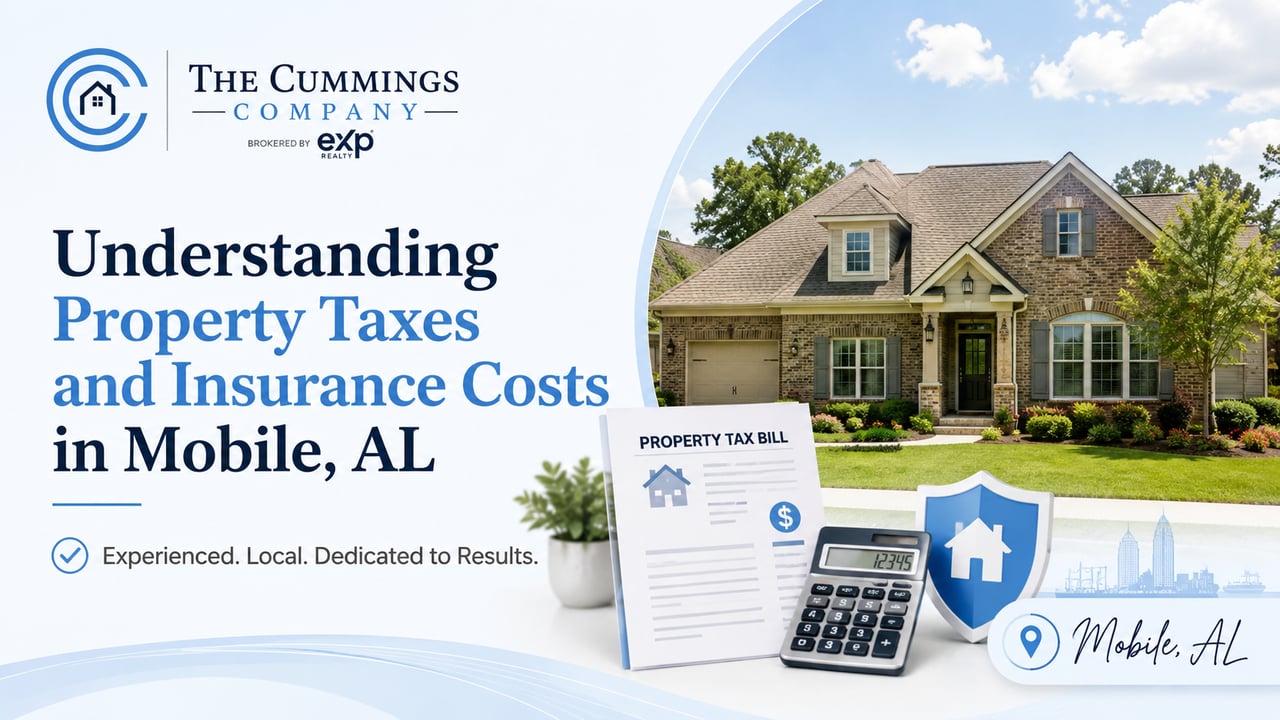
Understanding property taxes and homeowners insurance in Mobile, Alabama is essential for setting a realistic monthly budget and avoiding surprises at closing. This guide breaks down how both costs work locally and how they impact your total cost of homeownership in Mobile’s residential market.
Why Taxes and Insurance Matter in Mobile
Mobile is an affordable market on price per square foot, but Gulf Coast risks and local tax structures make “extras” like taxes and insurance a meaningful part of your payment. For many buyers, property taxes and insurance together can add several hundred dollars a month on top of principal and interest.
In practice, most lenders collect both items in an escrow account and pay them for you, so understanding these costs upfront helps you compare homes apples‑to‑apples. A house that looks affordable on list price alone may feel very different once you factor in its tax district and required insurance coverages.
How Property Taxes Work in Mobile, AL
In Alabama, property taxes are based on the assessed value of your home, not the full market value. For owner‑occupied residential property, the state sets the assessment rate at 10% of the appraised (market) value.
The basic formula is:
-
Assessed value = appraised value × 10% (for residential)
-
Tax bill (before exemptions) = assessed value × local millage rate
Millage rates are set by the state, Mobile County, the school system, and (if you are inside city limits) the City of Mobile. The state charges 6.5 mills, and local entities add their own millage on top, so the total rate varies depending on where in the county you live.
A few key points Mobile buyers ask about:
-
Homes are reassessed periodically to reflect current market conditions.propertytaxrecords.
-
Mobile County’s effective property tax rate is around 0.6% of market value on average, generally lower than the national median.
-
Property taxes are due October 1 each year, and you can pay without penalty until December 31; after that, interest and fees apply.
The median Mobile County homeowner pays under $1,000 per year in property taxes, but your actual bill can be higher or lower depending on value, exemptions, and exact location.
Local Exemptions and Ways to Lower Your Tax Bill
Alabama offers several exemptions that can significantly reduce your Mobile property tax bill if you qualify. The most common for owner‑occupants is the homestead exemption, which applies when the home is your primary residence.
Highlights Mobile homeowners should know:
-
Homestead exemption: Reduces the taxable portion of your assessed value; you must apply with the county to receive it.
-
Age or disability‑based exemptions: Qualifying seniors or disabled homeowners may receive additional reductions, especially on state portion of the tax.
-
Appeals: If you believe your value is too high, you can request an informal review and, if needed, file a formal appeal with the Mobile County Revenue Commissioner’s office.
Mobile County provides an online property search where you can look up a parcel by owner name, address, or parcel ID and view tax history, assessments, and payment status. You can also pay property taxes online, by mail, in person at the main Michael Boulevard office, or at satellite locations around the county.
Homeowners Insurance Costs in Mobile
Insurance is where many Gulf Coast buyers feel sticker shock. Mobile’s coastal location, hurricane exposure, and flood‑risk pockets put upward pressure on premiums compared to inland Alabama.
Recent analyses show:
-
Alabama’s average homeowners insurance cost is around $1,600–$1,700 per year for a standard policy with $300,000 in dwelling coverage.
-
Estimates specific to Mobile indicate annual premiums in the mid‑$3,000s, with some sources noting averages above $3,500 and others, for higher‑risk profiles, above $5,000 per year.
Actual premiums vary widely based on:
-
Exact location (including distance from the coast and wind/flood zones)
-
Age, construction type, and roof age
-
Coverage limits, deductibles, and whether wind or hail are included or written on a separate policy
Flood insurance is a separate policy if your home is in a FEMA‑mapped flood zone, and your lender will require it if you are in a high‑risk zone with a federally backed mortgage. That additional policy can add a meaningful monthly cost, especially in low‑lying areas or near waterways.
What This Means for Your Monthly Payment
When you’re shopping for homes in Mobile, you want to look beyond list price and interest rate to your true monthly obligation. Lenders typically bundle four components into your payment:
-
Principal
-
Interest
-
Taxes
-
Insurance
For a typical Mobile home, the relatively modest property taxes may be offset by higher‑than‑expected homeowners insurance, especially closer to the Bay or Gulf. Two homes with similar prices in different school districts or risk zones can have very different escrow payments.
A practical example many buyers find helpful:
-
Home A: Inside city limits, newer roof, outside high‑risk flood zone – moderate taxes, moderate insurance
-
Home B: Near water, older roof, mapped in a high‑risk flood zone – similar purchase price but potentially lower taxes and significantly higher combined insurance (home + wind + flood)
Running those scenarios in advance with your lender and a local insurance agent helps you target homes that fit both your lifestyle and your monthly budget.
Local FAQs:
What are Mobile, AL property taxes based on?
They are based on the county’s appraised value of your home, multiplied by a 10% assessment rate for residential property and then by the local millage rate for your area.
When are property taxes due in Mobile County?
Property taxes are billed as of October 1 each year, and you can pay without penalty through December 31 before interest and fees begin.
How much are property taxes on a typical Mobile home?
The median homeowner in Mobile County pays under $1,000 per year, though the exact amount depends on location, value, and exemptions.
Why is homeowners insurance so high in Mobile?
Mobile’s exposure to hurricanes, severe storms, and localized flooding increases risk, which leads insurers to charge higher premiums than many inland markets.
Do I need flood insurance in Mobile?
If your home is in a high‑risk FEMA flood zone and you have a mortgage from a federally regulated lender, flood insurance is required; even outside those zones, many owners choose it for added protection.
Can I look up a Mobile property’s taxes online?
Yes, Mobile County offers a free online portal where you can search properties, review assessments, and print tax records.
If you tell me your target price range, I can outline a sample monthly payment for a Mobile home that includes realistic local estimates for taxes and insurance.