Most buyers treat the termite letter as a formality. It shows up somewhere in the closing package, gets a quick glance, and gets filed away next to the survey and the title commitment. In most of the country, that instinct makes sense. A seller's disclosure form has already told you what the seller knows, and the pest report is just confirmation.
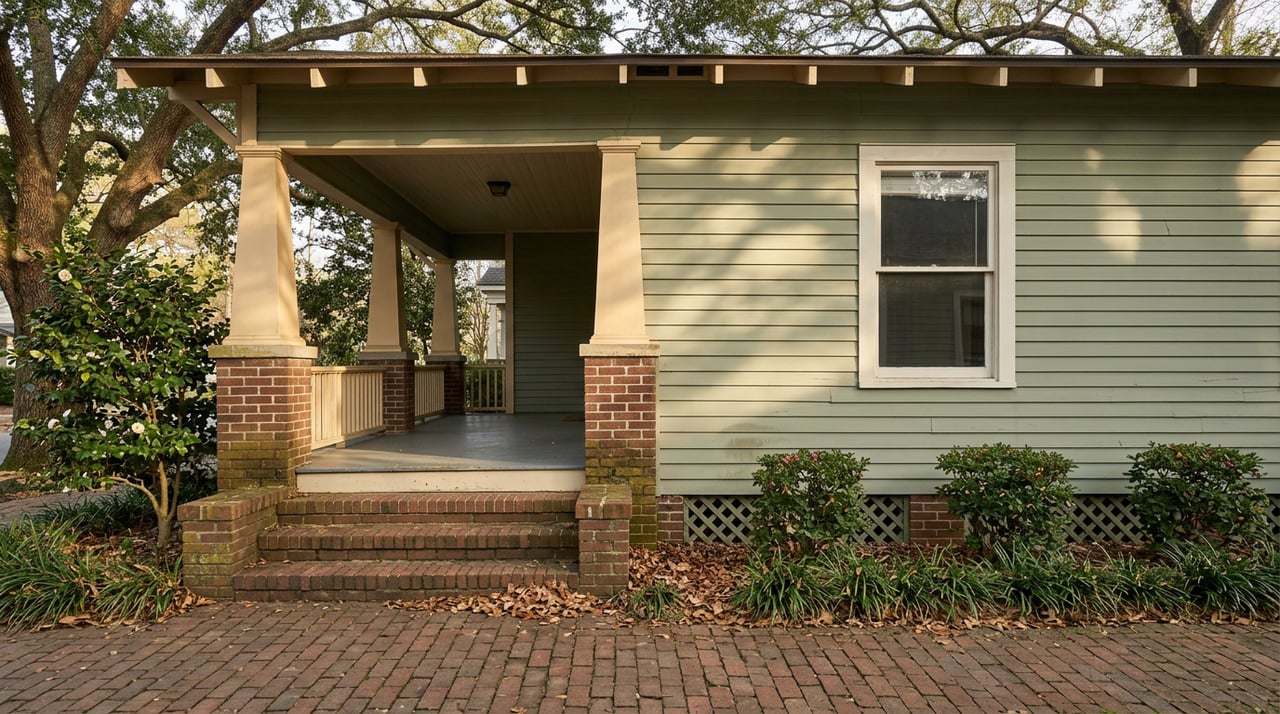
Alabama does not work that way. There is no state-required seller disclosure form here at all. Alabama is one of only three states still operating under caveat emptor, the legal doctrine that puts the burden of discovery entirely on the buyer. The Alabama Real Estate Commission states the principle plainly: "there is no warranty which comes with the sale of a used home." In Midtown, where the housing stock runs from 1880s cottages to 1950s bungalows across roughly 467 acres and 1,270 contributing buildings in the National Register district alone, that legal fact collides with a physical one. This is also the part of Mobile that pest control operators consistently flag as carrying the heaviest Formosan termite pressure in the city. Put those two things together and the wood infestation report stops being paperwork. It becomes close to the only structured, third-party account of the property's condition that a Midtown buyer is going to get before closing.
That is the piece of this market that a generic inspection checklist misses, and it changes how you should read every line of that report.
No Disclosure Form Means the Inspection Carries the Load
Sellers in Alabama do have to answer direct questions honestly, disclose known health or safety defects that aren't visible, and avoid active concealment. Those are real legal exceptions, but they are narrow, and they require the buyer to have asked the right question or the defect to meet a fairly high bar for "not readily observable." Outside of those exceptions, a seller can simply say nothing and stay within the law.
That is why guidance on Alabama transactions keeps coming back to the same point: thorough due diligence is not optional, it is the buyer's only real protection. In most disclosure states, a buyer layers a professional inspection on top of a seller's written statement. In Midtown, the inspection often is the statement. If the WDO letter and the general home inspection do not catch something, there may be no other document in the file that would have.
What the WDO Letter Actually Checks
The wood destroying organism inspection, known locally as the termite letter or the NPMA-33, is required for most VA, FHA, and conventional loans in Alabama and has to be performed by an operator certified by the Alabama Department of Agriculture and Industries. The inspector has to verify specific clearance standards before signing off: at least 8 inches between girders and soil, at least 12 inches between floor joists and soil, and no remaining wood-to-soil contact anywhere on the structure, including porch steps and planter boxes pushed against the foundation. A clean report typically runs $100 to $199 stand-alone.
Here is the part that matters for a caveat emptor buyer: the WDO letter is a visual inspection of accessible wood. It documents active and prior infestation where an inspector can see it. It does not open walls, and it does not evaluate hidden damage behind finished surfaces or under flooring. If it comes back clean, that tells you what is visible today. It does not tell you what happened in 2019 and got patched over, and in a state where the seller has no obligation to volunteer that history, the letter's limits are your limits too.
Why Midtown's Foundations Change the Math
A slab home and a pier-and-beam home do not get the same termite job, and pricing a Midtown property like a newer West Mobile build is a common mistake. Slab construction calls for drilling through concrete for sub-slab injection. Pier-and-beam homes, common throughout Midtown's pre-1970 housing stock, call for trenching and crawlspace work instead. A house with an original pier structure and a later slab addition effectively gets scoped as two separate jobs.
| Foundation Type | Typical Treatment Approach | What Drives Cost |
|---|---|---|
| Slab | Drilling through concrete for sub-slab liquid injection | Linear footage, drilling labor |
| Pier-and-beam | Trenching and crawlspace liquid or bait treatment | Crawlspace access, joist and pier condition |
| Mixed (pier home with slab addition) | Both methods, scoped as separate jobs | Combined footage of both systems |
Formosan termites add another wrinkle that a standard perimeter treatment does not solve. Unlike native subterranean termites, Formosan colonies build aerial carton nests inside wall voids and eaves, dense moisture-holding masses that let the colony keep feeding without ever touching the soil. A liquid barrier around the foundation protects the structure going forward but does not reach a nest already established in a wall. That is why bait systems like Sentricon get recommended so often for confirmed Formosan activity in older neighborhoods. They double as an ongoing monitoring grid rather than a one-time barrier.
For a buyer, this means two things worth asking before you waive a contingency:
- Whether any existing termite bond is retreat-only or repair-and-retreat, since the second is a materially bigger promise in Formosan country and priced accordingly
- Whether that bond transfers to a new owner at sale, and at what renewal cost, in writing rather than as a verbal assurance
General termite treatment for an average home runs roughly $1,200 to $2,500 or more, and foundation re-leveling on a pier-and-beam home with steel piers can run anywhere from $3,000 for minor adjustments to $15,000 or beyond for a full correction. Termite damage repair itself spans an even wider range, from a few hundred dollars for cosmetic fixes to $20,000 or more when years of undetected activity have compromised structural framing. None of those numbers are quoted honestly until an operator has actually walked the crawlspace, which is one more reason the pre-closing inspection window matters more here than in a newer-construction neighborhood.
The Second Approval Nobody Mentions Until Renovation Starts
Say the inspection turns up something fixable, a section of siding that needs replacing, a window that no longer seals. In most Mobile neighborhoods, that is a permit and a contractor. In Midtown, it can also be an approval process that has nothing to do with the building code.
Midtown is one of the seven locally designated historic districts where the city's Architectural Review Board has to approve exterior work before it begins, according to the Mobile Historic Development Commission's own guidance. That includes fences, driveways, and any amenity visible from the outside, not just additions. Minor repairs can sometimes get a staff-level Certificate of Appropriateness, but anything beyond that goes to the full board, which meets on a set schedule rather than on demand.
This is not a reason to avoid a historic Midtown property. It is a reason to build the timeline into your offer. A termite repair that requires opening exterior siding, or a rotted porch column that needs replacing in a way that changes its appearance, may need board sign-off before a contractor can even pull the permit. Buyers who assume repairs move at the same pace as a 2020s subdivision home end up surprised by a schedule that runs on the board's calendar, not the closing date.
Alabama's caveat emptor rule "does not protect sellers from liability for active concealment or knowing deception," but proving it requires clearing a high bar, which is exactly why the burden functions, in practice, as the buyer's to carry.
What This Actually Means at the Table
None of this is a reason to walk away from a Midtown listing. It is a reason to treat the inspection period differently than you might elsewhere. Get the WDO letter, but also get a full home inspection that goes beyond visible wood, since the two documents are covering different ground and together they come closer to functioning like the disclosure form Alabama does not require. Ask direct questions about treatment history, because a seller who is asked has to answer honestly even without a form. Get bond terms and transferability in writing before you rely on them. And if your plans include any exterior repair or renovation, ask early whether the property sits inside one of Midtown's historic district boundaries and what that means for your timeline, not after the contractor is already scheduled.
Frequently Asked Questions
Does the termite letter replace a full home inspection in Alabama? No. The WDO letter documents visible wood-destroying organism activity and the structural clearances required for closing. A general home inspection covers roofing, systems, and structural issues the termite letter does not address, and in a caveat emptor state both matter more than they would where a seller disclosure form exists.
If the WDO report comes back with active termites right before closing, does that kill the deal? Not automatically. A failed report usually comes with a treatment and repair quote from the inspecting operator, and lenders will often accept a treatment-and-warranty plan in place of a fully clear report. It does mean a new round of negotiation over who pays and on what timeline.
Do I need Architectural Review Board approval for storm repairs or only for aesthetic upgrades? The city's guidance covers work to the exterior of the building generally, which includes repairs, not just discretionary upgrades. If the work is visible from the outside and changes the property in a locally designated historic district, it is worth confirming with the Mobile Historic Development Commission before assuming a standard building permit is the only step required.
Buying or selling a historic home in Midtown comes with more moving pieces than a typical Mobile transaction, and the right agent should be walking you through each one before it becomes a surprise at the closing table. The Cummings Company works Midtown and Mobile's other historic districts regularly and can help you line up the right inspections, ask the right questions on treatment history, and time a renovation around the approvals it actually needs. Start Your Home Search today.